Dhol (Bihu Dhol)
Code : P14159
INR
 13948 /
 Piece MRP : 26088 47% Off Excluding Taxes & Duties Net Weight : 0.500 Kg
Description :
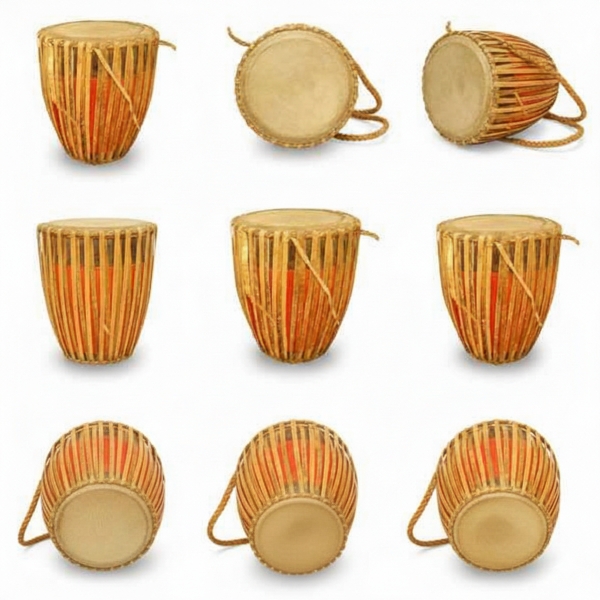
The Assamese Dhol is a traditional double-sided barrel drum, central to Bihu festivities and folk music in Assam. Crafted from wood (Jackfruit/Sham) and animal hide, it is hung around the neck and played with a bamboo stick on the right side and hand on the left. It produces loud, vibrant, and rhythmic beats indispensable to Assamese culture. The sound of the Dhol, known for its booming, high-energy, and rhythmic beats, is considered the heartbeat of Assamese cultural festivities. Seller Status : Location : Assam, India
Specification :
| Origin |
: |
Historical Context: Dates back to the late medieval era, particularly flourishing during the Ahom and Koch dynasties. It was historically patronized in the royal courts (such as Sukaphas court).
Indigenous Evolution: Evolved from ancient tribal log drums into a sophisticated barrel drum specifically designed to accompany the fast-paced Bihu dance.
Geographic Centre: While played across the state, the highest concentration of traditional manufacturers is found in Nagaon, Sivasagar, and Guwahati. | | Speciality |
: |
Double-Faced Asymmetry: Unlike many standard drums, the two faces have distinct functions; the Kobani (right side) provides high-pitched sharp strikes, while the Tali (left side) produces a deep, bass resonance.
Volume-to-Size Ratio: Despite being relatively compact, the Bihu Dhol is famous for its high decibel output, designed to be heard across open festival grounds.
Regional Variants: Apart from the Bihu Dhol, Assam also features the Jay Dhol (used in religious/folk dances) and the Bar Dhol (a larger, more sombre version). | | Cultural & Regional Heritage |
: |
Spiritual Status: Referred to as Deva Vadya (Instrument of the Deities), believed to have been brought to Earth from the heavens by mythical figures like Narada.
The Lifeline of Bihu: It dictates the pace of the Husori (caroling) and the Bihu dance. No Bihu celebration is considered complete without the Dholar Chap (the beat of the dhol).
Symbol of Pride: A Dhol player (Dhuliya) holds a position of high respect in Assamese rural society. | | Traditional Materials & Construction |
: |
The Shell (Dima or Khola): Carved from a single block of Jackfruit wood (Kanthal) or Sham wood, chosen for their superior resonance and durability.
Animal Hide:
Tali (Left face): Usually made from thicker Goat skin for a deep bass.
Kobani (Right face): Made from thin, high-tension Parchment or Calf skin for a sharp, high-pitched sound.
Lacing (Barati): Sturdy leather thongs made of cow or buffalo hide used to provide tension between the two heads.
The Band (Maluwa): A bamboo or cane ring that holds the drumheads in place. | | Acoustic & Tuning |
: |
Pitch Contrast: The right head is tuned to a significantly higher pitch than the left, creating the signature Tak-Dhum rhythmic contrast.
Tension Adjustment: Tuned by tightening or loosening the Barati (leather straps). In humid weather, players often warm the drumheads near a fire to tighten the skin.
Resonance: The hollowed interior is carefully shaped to ensure the sound reflects perfectly from the wooden walls. | | Ornamentation & Aesthetic Details |
: |
Traditional Covering: Often wrapped in a Gamosa (traditional Assamese cloth) when played, which serves as both decoration and a protective layer.
Lacquer Work: The wooden body is often polished with a reddish-brown or dark natural finish.
Decorative Straps: The shoulder strap (Tikani) is sometimes braided with colourful threads. | | Playability & Physicality |
: |
Sticks & Hands: Played using a bamboo stick (Dholar Mari) in the right hand for sharp accents and the bare left palm for bass beats.
Posture: Suspended from the neck/shoulder using a strap, allowing the Dhuliya to dance and move vigorously while playing.
Rhythmic Patterns (Chewa): Requires mastery over complex time signatures that accelerate as the dance reaches its climax. | | Maintenance & Preservation |
: |
Temperature Control: Drastic changes in humidity can cause the leather to slacken or the wood to crack; it is typically stored in a dry, shaded place.
Skin Conditioning: Occasional application of mustard oil to the leather straps (Barati) keeps them supple and prevents snapping under high tension.
Pest Protection: Since it is made of organic wood and skin, it is often kept in high, well-ventilated lofts to protect it from dampness and wood-boring insects. |
About Seller :
The Seller is located from "Assam, INDIA " and specialized in Musical Instruments.
|

.jpg "Click To Zoom")
.jpg)
.jpg)
.jpg)
.jpg)
.jpg)
.jpg)
.jpg)