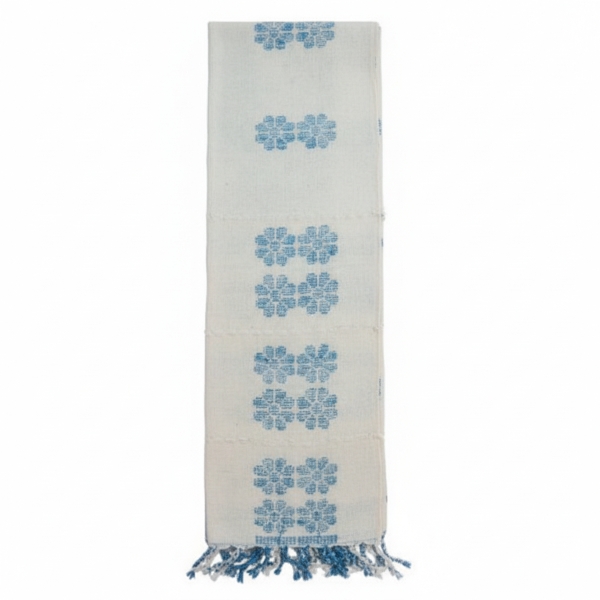
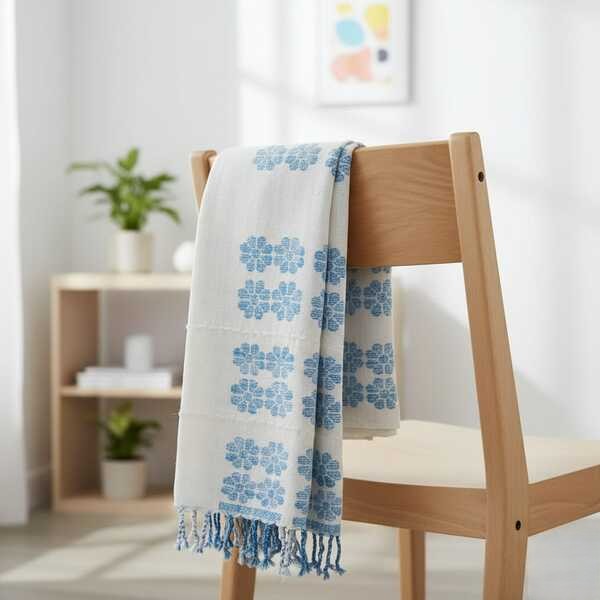
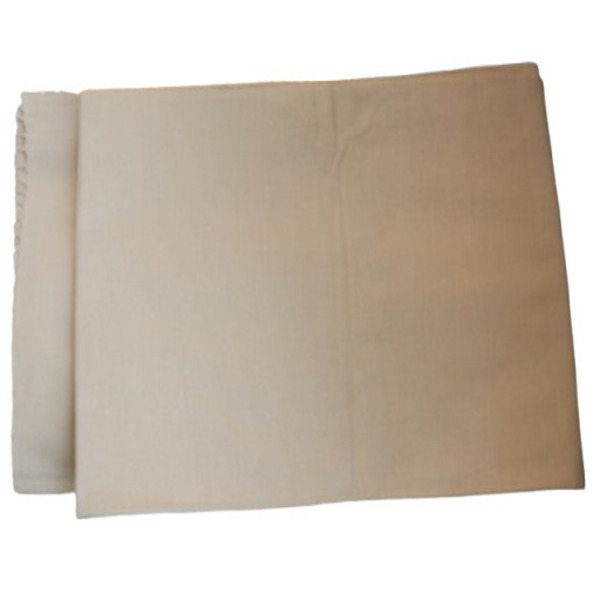
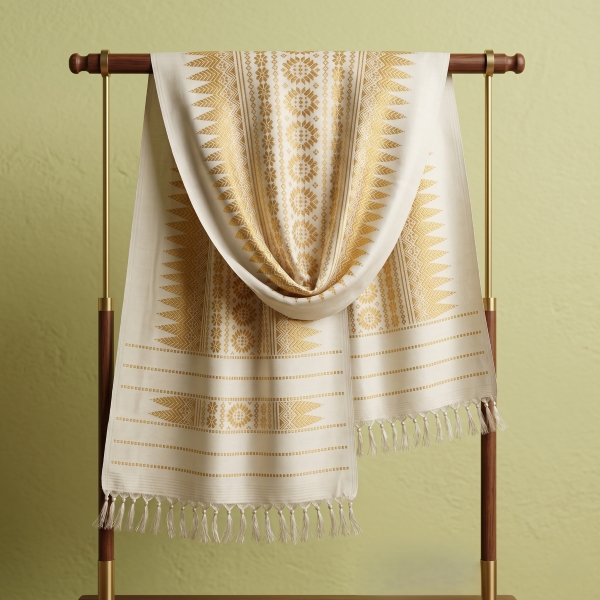
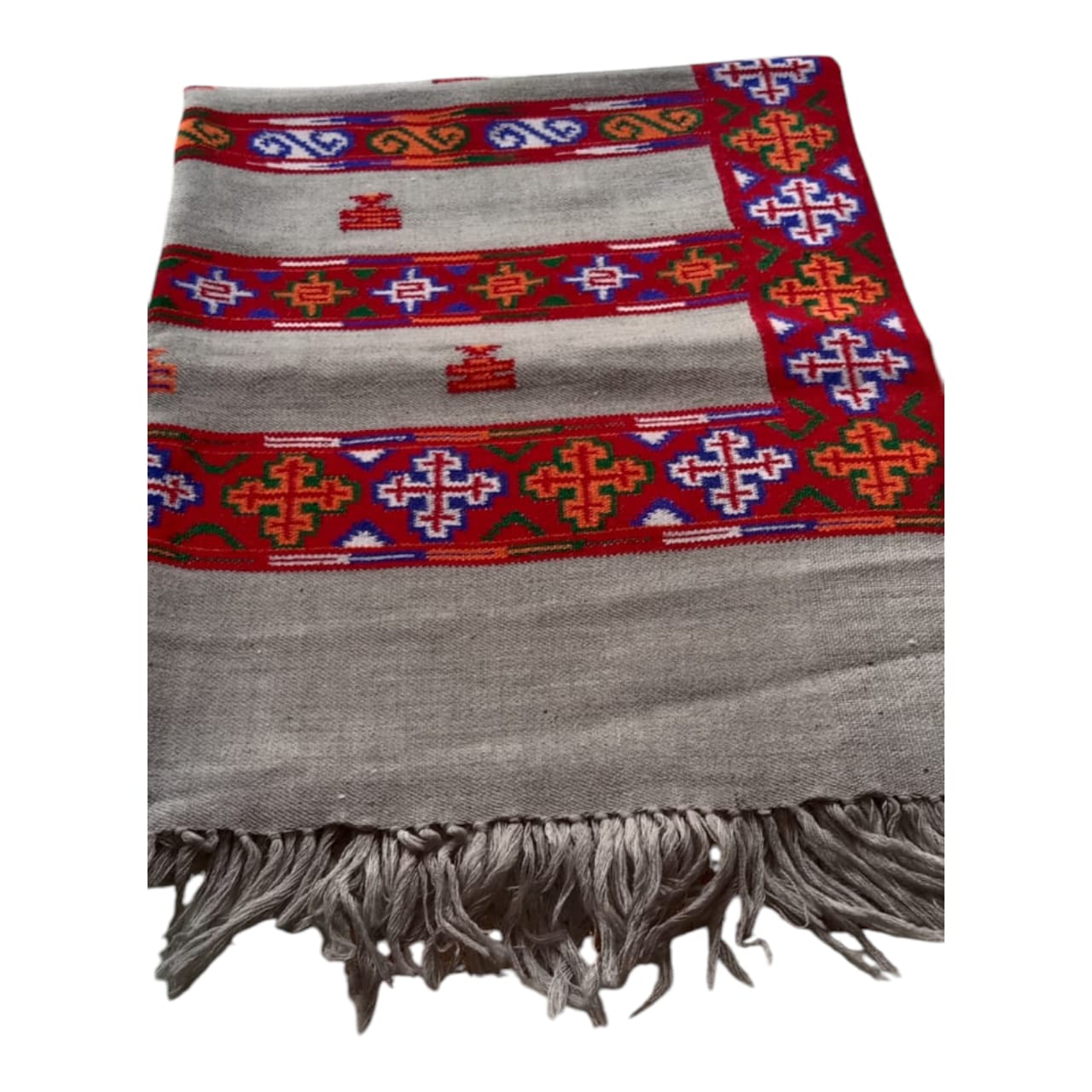
Eri Stole
Code : P13995
INR
 1680 /
 Piece MRP : 2416 30% Off Excluding Taxes & Duties Net Weight : 0.500 Kg
Description :
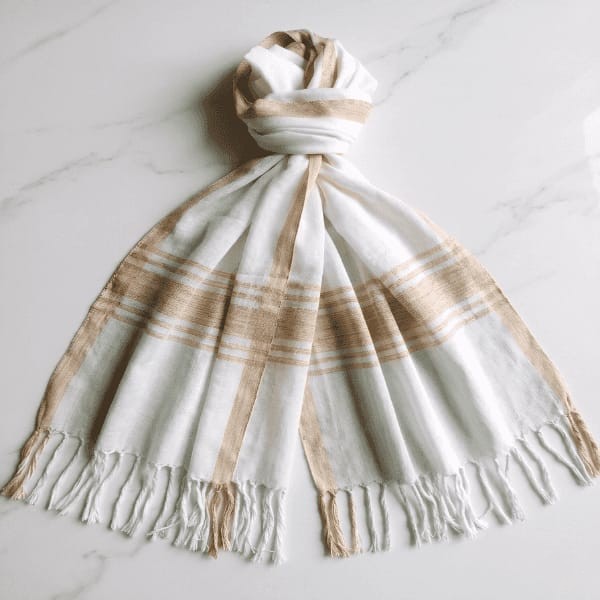
An Eri stole is a sustainable, luxurious, and ethical accessory, often called Ahimsa (non-violent) or Peace silk, handcrafted from cocoons in Northeast India without harming the silkworms. It is known for its wool-like, soft texture, natural white or beige colour, and exceptional thermoregulatory properties, providing warmth in winter and comfort in summer. These stoles are often handmade by local artisans in Assam, Meghalaya, and other North Eastern states, frequently featuring traditional motifs, woven borders, or a natural, earthy, and muted colour palette. Seller Status : Location : Assam, India
Specification :
| Length |
: |
74 Inches | | Width |
: |
19 Inches | | Country Of Origin |
: |
Handcrafted in Assam, India, the global hub of Eri silk, where it holds Geographical Indication (GI) status to protect its authentic tribal heritage. Each piece is woven by Bodo artisans using centuries-old techniques, making it a certified product of the regions unique subtropical ecosystem. | | Fabric |
: |
Eri Silk (also known as Endi or Errandi). Unlike the shimmering, golden Muga silk of Assam, Eri has a matte finish and a soft, wool-like texture. It is dense, durable, and becomes softer with every wash. | | Material |
: |
100% Natural Eri Silk. The fibres are derived from the cocoons of the Samia ricini moth, which feeds on castor plants. It is a protein fibre that is thermal-regulating—meaning it keeps the wearer warm in winter and cool in summer. | | Speciality |
: |
Ahimsa (Non-Violent) Silk: The silk is processed only after the moth leaves the cocoon naturally. No silkworms are killed during production.
Isothermal Properties: It is one of the few silks that offers significant warmth, often used as a light blanket or heavy shawl.
Organic & Eco-friendly: Traditionally processed without harsh chemicals or synthetic dyes. | | Technique Of Design |
: |
Hand-Spun: The silk is typically hand-spun using a drop spindle (Takli), giving the yarn a beautiful, slightly irregular texture.
Extra Weft Technique: Bodo weavers use a traditional throw-shuttle or fly-shuttle loom to weave intricate patterns. The designs are created by inserting additional coloured threads (extra weft) into the base fabric during the weaving process.
Natural Dyeing: Often coloured using turmeric, lac, iron ore, or indigo to achieve earthy tones. | | Tribe Name |
: |
The Bodo Tribe. The Bodos are the largest ethnolinguistic group in Assam and are considered master weavers. Weaving is an integral part of a Bodo womans identity. | | Cultural & Traditional Significance |
: |
Heritage of Resilience: For the Bodo people, the Eri stole is more than clothing; it is a symbol of their connection to the land. It is commonly gifted to elders and guests as a mark of high respect (Gubun-Guban).
Symbolic Motifs: You will often find motifs like the Agor (patterns) inspired by nature—the Hajw Agor (mountain pattern) or the Phareo Megon (pigeons eye).
Sustainable Living: The production of Eri silk is a cottage industry that supports rural Bodo economies, preserving ancient tribal knowledge in a modern, fast-fashion world. | | Durability |
: |
Eri silk is widely considered the strongest and most durable of all Indian silks.
High Tensile Strength: Because the fibres are spun like cotton or wool (rather than reeled as a long continuous filament), the fabric is exceptionally resistant to tearing and abrasion.
Aging Gracefully: Unlike Mulberry silk, which can become brittle over decades, Eri silk actually improves with age. It becomes softer, more supple, and develops a subtle lived-in sheen the more it is worn.
Pilling Resistance: It has low elasticity, meaning the stole maintains its shape well and does not easily stretch out or develop pills. | | Breathability |
: |
Despite its woolly appearance and ability to provide warmth, Eri silk is remarkably isothermal and breathable.
Porous Structure: The spun fibres create tiny air pockets within the fabric. This allows for excellent air circulation, preventing that stifling feeling often associated with synthetic insulators.
Moisture Absorption: It can absorb up to 30% of its weight in moisture without feeling damp to the touch. This wicks sweat away from the skin, making it comfortable for transitional weather (Spring/Autumn) and cool summer evenings.
Thermal Regulation: It naturally adjusts to your body temperature, acting as a natural thermostat. | | Care Instruction |
: |
Washing: Hand wash only in cold or lukewarm water; avoid soaking for more than 5 minutes.
Detergent: Use a mild, pH-neutral liquid or silk-specific soap; never use bleach.
Drying: Do not wring or twist; roll in a towel to remove water and air-dry in the shade.
Ironing: Use a low Silk setting while the fabric is slightly damp, ironing only on the reverse side.
Storage: Fold in a breathable muslin cloth in a cool, dry spot; use neem leaves or cedar to ward off moths.
NOTE: Since Eri silk is naturally antimicrobial and does not retain odors easily, you do not need to wash it after every use. Often, simply airing it out in a breezy, shaded spot is enough to refresh it! | | Additional Information |
: |
Because Eri silk is a hand-crafted natural fibre, slight variations in weave and shade are not defects but hallmarks of its authentic, handmade tribal origin. |
About Seller :
The Seller is located from "Assam, INDIA " and specialized in HANDLOOMS & HANDCRAFTED.
|


.jpg)

.jpg)

.jpg)
.jpeg)


.jpg)



.jpg)
.jpg)