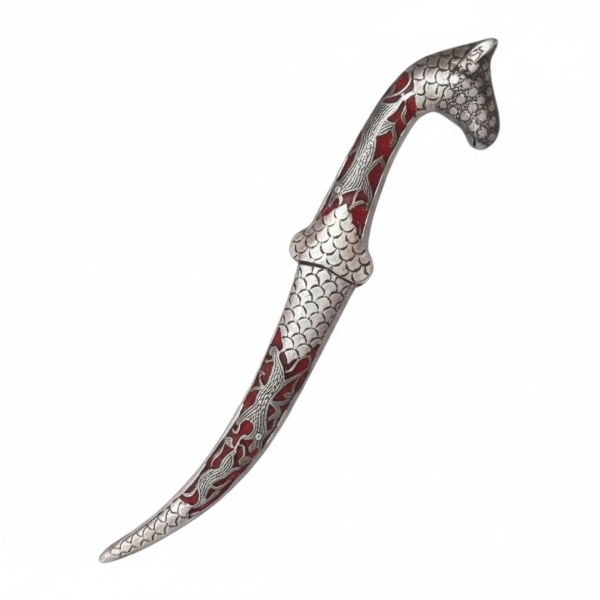
Bone Handle Dagger
Code : P13982
INR
 6825 /
 Piece MRP : 9809 30% Off Excluding Taxes & Duties Net Weight : 0.750 Kg
Description :
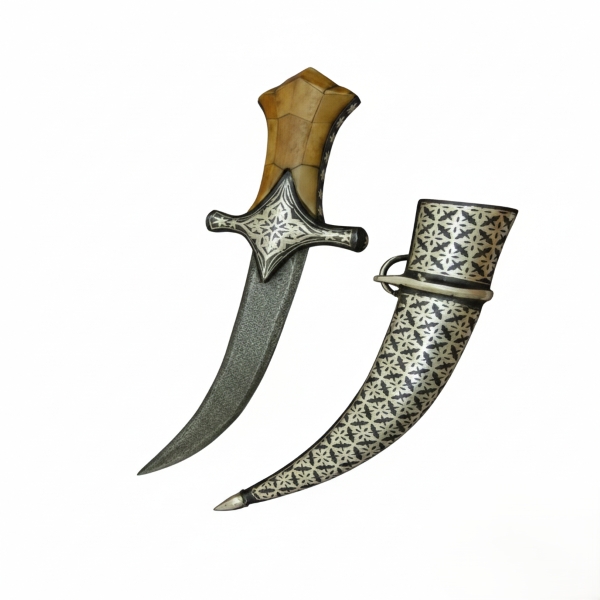
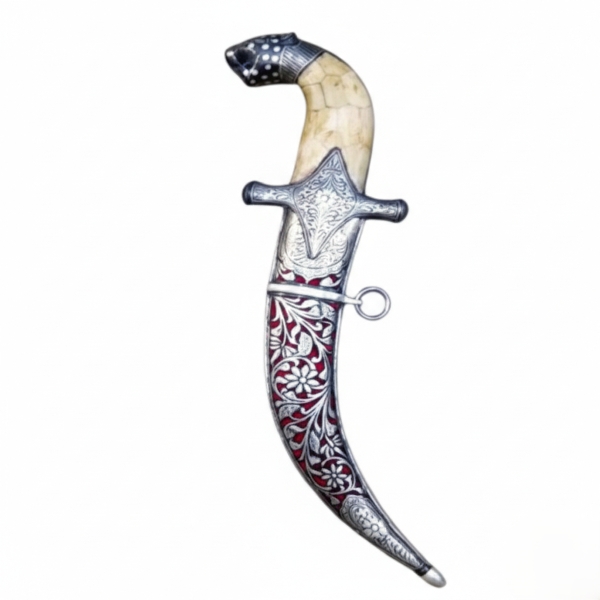
A bone handle dagger is a knife featuring a grip constructed from natural, durable animal bone (typically cow, camel, or buffalo) that is polished, textured, or carved for a traditional, ergonomic, and aesthetic design. Often used by collectors and in traditional crafting, these daggers are favoured for their unique, organic look, strength, and ability to be dyed or jigged for improved grip. These daggers commonly feature Damascus or high-carbon steel blades, combining rustic, traditional, or artistic designs with practical, sturdy functionality, frequently finished with metallic, silver, or brass accents. Bone-handled knives have been used for thousands of years and remain a staple in traditional, handcrafted cutlery. Seller Status : Location : Rajasthan, India
Specification :
| Length |
: |
12 inches | | Country Of Origin |
: |
Region: Exclusively manufactured in the handicraft clusters of Udaipur, Jodhpur, and Nagaur, Rajasthan.
Legacy: Forged by the Sikligar community, a traditional blacksmith tribe that has served Indian royalty for centuries. | | Specialty |
: |
Koftgari Work: The intricate art of inlaying gold or silver wire into the steel of the blade or hilt.
Jointless Construction: Many premium versions feature a seamless transition between the hilt and the blade tang.
Micro-Carving: The bone handles often feature miniature carvings of elephants, lions, or floral patterns. | | Uses |
: |
Wedding Attire: An essential part of the Poshak (traditional dress) for a Rajasthani groom.
Home Décor: Displayed in Baithaks (living rooms) as a symbol of heritage.
Gifting: Considered a high-honour gift for dignitaries or during housewarming ceremonies. | | Theme |
: |
Royal Rajputana: Designs often depict Shikar (hunting) scenes or the Mughal Floral aesthetic.
Martial Pride: The curvature and sharpness emphasize the warrior spirit of the desert. | | Weight |
: |
Standard: 500g to 800g (varies with blade thickness).
Balance: The weight is concentrated at the bolster to ensure the dagger sits firmly in the hand without slipping. | | Blade Material |
: |
Damascus Steel (Wootz): Recognized by its water-like wavy patterns; prized for its strength and flexibility.
High Carbon Steel: Often used for its ability to take a mirror-polish and sustain a sharp edge. | | Handle Material |
: |
Camel Bone: The most traditional choice, offering a dense, durable, and naturally creamy texture.
Buffalo Bone: Used for a heavier, more solid feel; often stained with natural dyes for an antique look. | | Artisanal Characteristics |
: |
Hand-Finished Grinds: Each blade is hand-ground on a stone wheel, giving it a unique, non-industrial character.
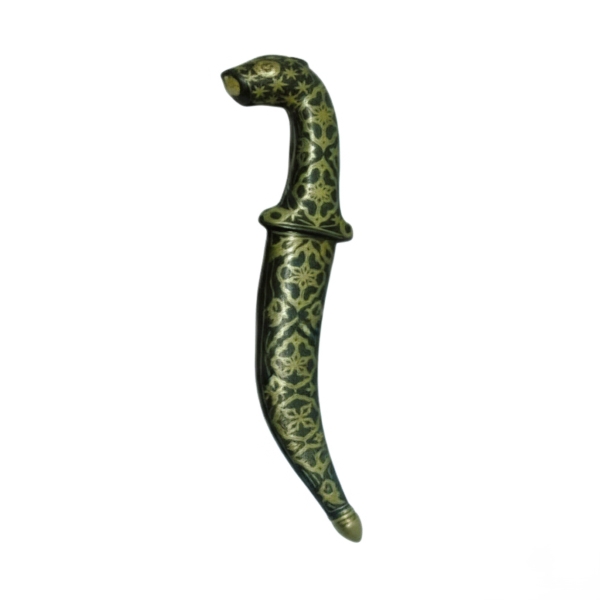
Velvet Sheath (Mian): The wooden scabbard is wrapped in high-quality velvet (Maroon or Bottle Green) with brass or silver fittings known as the Chape and Locket.
Natural Pores: Fine, microscopic dots on the handle surface prove the use of genuine, non-synthetic bone. | | Cultural And Traditional Heritage |
: |
The Symbol of Saan: In Rajasthan, the dagger is a symbol of Saan-Baan-Shaan (Dignity and Pride). It represents the duty to protect the weak.
Religious Significance: Often kept in home shrines (Mandirs) for protection and invoked during the Shastra Puja (Worship of Weapons) during the Dussehra festival. |
About Seller :
The Seller is located from "Rajasthan, INDIA " and specialized in HANDICRAFT.
|

.jpg "Click To Zoom")
.jpg)
.jpg)
.jpg)